

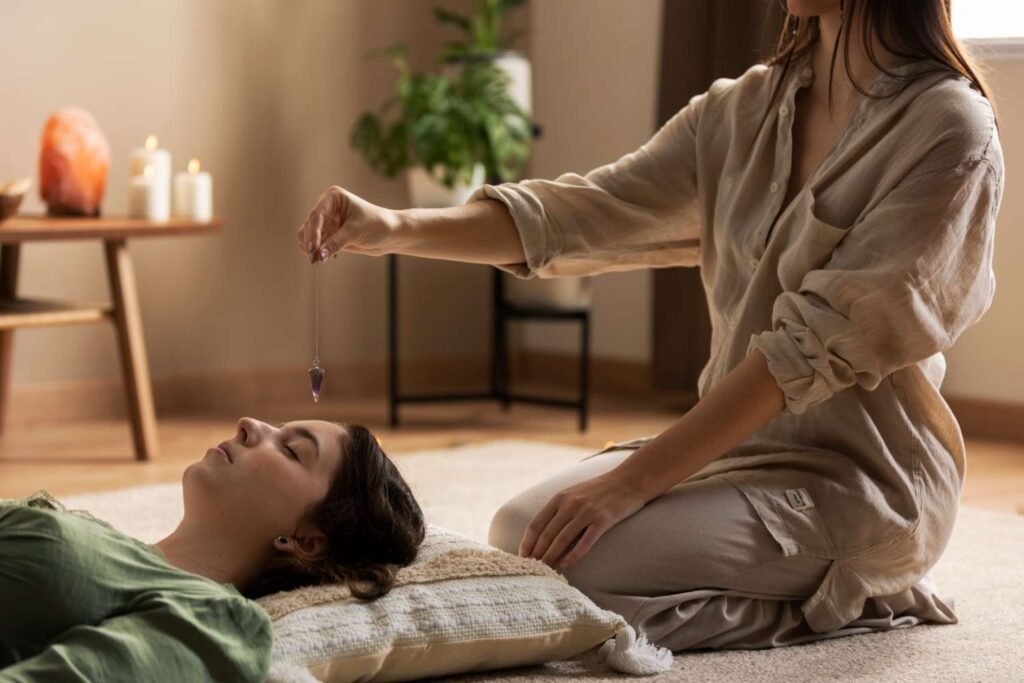
Emotional ups and downs are a natural part of life. Work pressure, family responsibilities, changing routines and everyday worries can sometimes leave the mind feeling restless or overwhelmed. Regular meditation can provide a simple way to pause, become more aware of your thoughts and create a calmer mental space. Healing Meditation Therapy in Pitampura can be considered as part of a broader approach to emotional well-being and inner calm.
Want a direct connection with us on Whatsapp? Click now.
Meditation is not about forcing the mind to stop thinking. Instead, it encourages you to observe your thoughts and feelings without immediately reacting to them. With consistent practice, this awareness can help you respond to everyday situations with greater patience and clarity.
Understanding Emotional Balance
Emotional balance does not mean feeling happy all the time or avoiding difficult emotions. It means developing a healthier way of recognising, understanding and responding to emotions.
For example, when frustration arises, an emotionally balanced response may involve taking a moment before reacting. Similarly, when worry becomes distracting, mindful awareness can help you notice the feeling rather than allowing it to control your entire attention.
Regular meditation supports this process by creating a quiet period in which you can observe your inner experience.
Meditation and Self-Awareness
One of the important aspects of meditation is increased self-awareness. During a meditation session, you may notice thoughts, physical sensations, emotions or changes in breathing.
Rather than judging these experiences as good or bad, meditation encourages observation. This practice can gradually make it easier to recognise emotional patterns in everyday life.
According to Dr. Arhat, developing awareness of your mental and emotional state can be a useful step toward creating healthier daily habits. Meditation can become a regular moment of reflection instead of another task that needs to be completed quickly.
How Regular Meditation May Encourage Inner Calm
A busy mind often moves between past experiences and future concerns. Meditation brings attention back to the present moment.
A simple practice may involve sitting comfortably, focusing on your breathing and gently returning your attention whenever the mind wanders. The goal is not perfect concentration. The repeated act of noticing distraction and returning to the present is itself part of the practice.
Creating a Pause Before Reacting
Strong emotions can sometimes lead to immediate reactions. A regular mindfulness practice can encourage you to notice what you are feeling before responding.
That small pause may help you approach conversations, decisions and stressful situations more thoughtfully. Over time, mindful breathing and meditation may become useful tools for managing everyday emotional challenges.
Supporting a Calmer Daily Routine
Meditation works best when it becomes a realistic part of your routine. You do not necessarily need a complicated setup. A quiet space and a few uninterrupted minutes can provide an opportunity to practise.
Some people prefer meditation in the morning, while others find it helpful before bedtime or during a break in the day. The most useful time is often the one you can maintain consistently.
What Is Healing Meditation Therapy?
Healing Meditation Therapy in Pitampura may involve a guided and structured approach to meditation and relaxation practices. The specific approach can vary according to an individual’s needs and overall well-being.
Rather than viewing meditation as a quick solution, it can be approached as a practice that develops gradually. Consistency, realistic expectations and personal comfort are important.
If you are exploring meditation for emotional well-being, discussing your concerns with a suitable professional can help you understand whether a guided approach is appropriate for you.
Meditation, Mindfulness and Emotional Awareness
Meditation and mindfulness are closely connected, but they are not necessarily identical. Meditation generally refers to dedicated practices that train attention and awareness. Mindfulness can also be incorporated into ordinary activities.
For instance, you can practise mindful eating by paying attention to taste, texture and the experience of eating. You can practise mindful walking by noticing your surroundings, breathing and body movements.
These small habits can encourage you to stay connected with the present rather than constantly becoming absorbed in thoughts.
Dr. Arhat recommends approaching mindfulness as a gradual habit rather than expecting immediate transformation. Like many personal practices, meditation can become more comfortable and meaningful with regularity.
Simple Ways to Build a Meditation Habit
Starting with manageable steps can make meditation easier to maintain.
Choose a Consistent Time
Pick a time that fits naturally into your day. A consistent routine can make meditation easier to remember.
Start Comfortably
Sit in a comfortable position where you can remain reasonably relaxed. You do not need to force yourself into an uncomfortable posture.
Focus on Your Breathing
Pay gentle attention to the natural rhythm of your breath. When your thoughts wander, simply notice it and return your attention to breathing.
Avoid Judging Your Practice
Some days may feel peaceful, while others may feel distracting. Both experiences are normal parts of practising awareness. Avoid treating a restless session as a failure.
Be Patient
Meditation is a practice, not a test. Give yourself time to understand what feels comfortable and sustainable.
When Guided Support May Be Helpful
Although meditation can be practised independently, some people prefer guidance, particularly when they are unfamiliar with meditation techniques or want a more structured routine.
Healing Meditation Therapy in Pitampura may offer a setting where meditation practices can be approached with greater structure and personal attention. A professional discussion can also help clarify realistic expectations and determine whether meditation fits within your overall approach to well-being.
It is important to remember that meditation should not be treated as a replacement for professional care when someone is experiencing persistent or significant emotional difficulties. Appropriate support should always be considered according to individual needs.
Making Inner Calm Part of Everyday Life
Inner calm does not mean that stressful situations will disappear. Instead, it can involve developing a more thoughtful relationship with your thoughts and emotions.
Regular meditation may help you create moments of stillness in an otherwise busy routine. With mindful breathing, self-observation and consistent practice, you can become more aware of how you respond to everyday experiences.
As Dr. Arhat explains, the value of meditation lies not only in the time spent sitting quietly but also in how greater awareness can influence daily habits and responses.
Conclusion
Emotional balance develops through awareness, healthy routines and the ability to respond thoughtfully to life’s challenges. Regular meditation can provide a practical space to slow down, observe your thoughts and reconnect with the present moment.
For people looking for structured guidance, Healing Meditation Therapy in Pitampura can be explored as part of an individual approach to emotional well-being. With realistic expectations and consistent practice, meditation may become a valuable part of a calmer daily routine.
Dr. Arhat encourages individuals to view meditation as a gradual practice of awareness rather than a quick fix. The aim is to create space for greater mindfulness, emotional understanding and inner calm in everyday life.